Rock’n’Roll — Listen to Music Online | Minatrix.FM | Page: 2
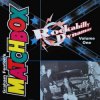
Matchbox - Washing Machine Boogie
02:19 5.55Mb [320 kbps] 46 0 0 12.03.2026 layden TOP 100 Rock, Rock&roll
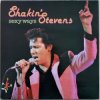
Shakin' Stevens and the Sunsets - Sexy Ways
02:40 6.35Mb [320 kbps] 21 0 0 08.03.2026 layden TOP 100 Rock, Rock&roll
The Darts - At My Front Door
02:03 4.97Mb [320 kbps] 44 0 0 20.02.2026 layden TOP 100 Rock, Rock&roll
Flying Saucers - The South's Gonna Rise Again
02:03 4.97Mb [320 kbps] 24 0 0 16.02.2026 layden TOP 100 Rock, Rock&roll

The Pirates - Milk Cow Blues
03:18 7.81Mb [320 kbps] 49 0 0 16.01.2026 layden TOP 100 Rock, Rock&roll
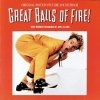
Jerry Lee Lewis - Great Balls Of Fire
01:49 1.75Mb [128 kbps] 178 0 0 05.01.2026 layden TOP 100 Rock, Rock&roll
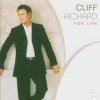
Cliff Richard - Thousand Miles to Go
04:24 6.13Mb [192 kbps] 43 0 0 03.01.2026 layden TOP 100 Rock, Rock&roll
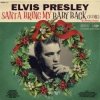
Elvis Presley - Santa Bring My Baby Back (To Me)
01:54 4.43Mb [320 kbps] 48 0 0 31.12.2025 layden TOP 100 Rock, Rock&roll
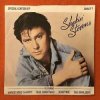
Shakin' Stevens - Blue Christmas
02:46 2.62Mb [128 kbps] 20 0 0 31.12.2025 layden TOP 100 Rock, Rock&roll

Brenda Lee - Rocking Around The Christmas Tree
02:07 4.93Mb [320 kbps] 57 0 0 17.12.2025 layden TOP 100 Rock, Rock&roll
The Teddybears - Jenta i jeans
02:30 2.36Mb [128 kbps] 45 0 0 30.11.2025 layden TOP 100 Rock, Rock&roll

Freddie "Fingers" Lee - Down On The Farm
01:42 4.17Mb [320 kbps] 33 0 0 24.11.2025 layden TOP 100 Rock, Rock&roll
Chas and Dave and Friends - That's Alright Mama
02:39 6.33Mb [320 kbps] 22 0 0 22.11.2025 layden TOP 100 Rock, Rock&roll
Shakin' Stevens and the Sunsets - It's Rock'n'Roll
03:14 7.65Mb [320 kbps] 26 0 0 16.11.2025 layden TOP 100 Rock, Rock&roll
Popular music genres
All genres →Rock’n’Roll: how American music changed the 20th century
Rock’n’Roll is a form of popular music that became widely established in the United States during the mid-1950s. Its foundations were shaped by rhythm and blues, blues, boogie-woogie, country and gospel. At the intersection of these traditions emerged a style built around a strong dance rhythm, expressive vocal delivery and instrumental parts that would later become recognizable elements of rock music.
The history of rock’n’roll cannot be reduced to a single musician or one “first” record. Long before the style became a mass youth phenomenon, rhythm and blues performers were already experimenting with characteristic rhythms, guitar parts and vocal techniques. During the 1950s, these musical ideas acquired a new name, a new audience and far broader cultural reach.
Before Elvis: the musical roots of rock’n’roll
One of the most important sources of early rock’n’roll was African American rhythm and blues of the 1940s. Dance bands made extensive use of blues-based harmonic progressions, energetic horn sections, piano and emotionally intense vocal performances.
Jump blues also played a major role. This energetic form of blues was closely related to swing. One of its best-known figures was Louis Jordan, whose recordings combined danceable rhythms, humorous lyrics and an expressive horn section.
The influence of Sister Rosetta Tharpe was equally significant. As early as the 1930s and 1940s, she combined gospel singing with energetic electric guitar playing. Her performance style became one of the important precursors of rock guitar. In 2018, Tharpe was inducted into the Rock & Roll Hall of Fame in the Musical Influence category, recognizing her major impact on later music.
Another important predecessor of the genre was Big Joe Turner. His powerful vocal style and rhythm and blues recordings directly connected earlier American dance music with the rock’n’roll of the 1950s.
A key point in this history is that many elements of what would later be called rock’n’roll already existed before the style achieved mass commercial success. It was not a case of inventing an entirely new musical language from nothing, but rather of existing traditions interacting, evolving and reaching a wider audience.
How the name Rock’n’Roll emerged
The expression rock and roll had been used in English-speaking culture long before the 1950s. It appeared in songs and everyday speech, carrying different meanings depending on context. For that reason, it would be historically inaccurate to claim that the name of the genre was invented by one specific person.
American radio DJ Alan Freed played an important role in popularizing the term. In the early 1950s, he introduced rhythm and blues records to a broader audience while using the phrase rock and roll. His radio programs and concert promotions helped younger listeners discover music that had previously often circulated through more separate recording and broadcasting markets.
Radio proved especially important. Listeners could hear a new record regardless of how established its performer was within the traditional entertainment industry. Radio broadcasts, jukeboxes and inexpensive 45 rpm singles all contributed to the rapid growth of the new style.
1954–1956: rock’n’roll becomes mass culture
One of the best-known recordings of the early era was Rock Around the Clock by the American group Bill Haley & His Comets. The song was recorded in 1954, but achieved particularly wide popularity in 1955. Its success demonstrated the commercial potential of the new dance-oriented sound.
At the same time in Memphis, producer Sam Phillips was developing the independent record company Sun Records. The studio worked with musicians influenced by blues, gospel and country. This mixture became an important part of the musical atmosphere of the American South.
In 1954, Sun Records released the first single by Elvis Presley, That’s All Right, recorded with guitarist Scotty Moore and double bassist Bill Black. The song had originally been written and recorded by blues musician Arthur Crudup. Presley’s version combined a blues foundation with a more country-oriented performance style.
Elvis soon became one of the most famous figures in rock’n’roll. His television appearances, stage movements and recordings helped transform the music into an international cultural phenomenon. His popularity, however, does not diminish the contribution of African American performers who had shaped much of the genre’s musical foundation.
In 1956, the debut album Elvis Presley, released by RCA Victor, reached number one on the U.S. album chart. By that point, rock’n’roll had already moved from being a relatively new musical style to one of the central elements of youth popular culture.
Chuck Berry, Little Richard and Fats Domino: three different approaches
Chuck Berry played an exceptional role in shaping the guitar language of rock’n’roll. His songs combined distinctive electric-guitar introductions, blues harmony and lyrics about the everyday lives of young Americans. Berry’s style influenced countless musicians in the decades that followed.
In the music of Little Richard, the piano occupied a central role. His rapid playing, intense vocal delivery and theatrical stage presence became defining features of mid-1950s rock’n’roll. Musicians like him helped make the genre associated not only with a particular rhythm, but also with a new form of stage expression.
Fats Domino represented another side of early rock’n’roll, one deeply connected to the musical traditions of New Orleans. His recordings feature characteristic piano figures, a smoother rhythmic feel and the influence of local rhythm and blues. His success helped demonstrate that rock’n’roll was not limited to a single vocal style, guitar technique or approach to performance.
These artists worked within overlapping musical traditions, but each possessed a highly distinctive identity. The diversity of the early scene helps explain why rock’n’roll cannot be defined by one fixed instrumental lineup or a single standard arrangement.
What makes rock’n’roll instantly recognizable
A large number of classic recordings use a 4/4 time signature with strong accents on the second and fourth beats of the bar — the so-called backbeat. This gives the music a steady dance pulse and clearly distinguishes it from some earlier popular orchestral styles.
A 12-bar blues form is also common in the harmony, although by no means every rock’n’roll song follows it. Musicians frequently used repeating bass patterns, boogie-woogie figures and short instrumental phrases that can often be recognized within the opening seconds of a track.
The instrumental lineup varied from one recording to another. Early rock’n’roll could feature electric guitar, acoustic guitar, double bass, piano, drums and saxophone. Electric bass and denser guitar sounds became more widespread later, but it would be misleading to treat heavily distorted guitar as an essential feature of 1950s rock’n’roll.
Vocal delivery was equally important. Performers drew on blues singing, shouts, sudden changes in intonation and spoken phrases. The character of a recording depended not only on melody and lyrics, but also on the way the musicians interacted with one another during the performance.
There is no single required tempo either. The genre includes both fast dance numbers and more moderate recordings that still preserve the characteristic rhythm and instrumental approach.
Rockabilly: a close relative of rock’n’roll
One of the most important styles of the early era was Rockabilly. Its name combines rock with hillbilly, an older term once used for certain forms of American rural music associated with what later became country.
Rockabilly is especially closely connected to the musical culture of the American South and the early recordings of Sun Records. It is typically characterized by lively guitar playing, prominent double bass — often using a slap technique — and vocals that combine elements of country and rhythm and blues.
Well-known representatives of early rockabilly include Carl Perkins, Johnny Burnette and Gene Vincent. Their music contributed to the development of the harder, more guitar-oriented side of early rock’n’roll.
Rockabilly should not be treated as a simple synonym for rock’n’roll as a whole. It is a specific stylistic branch within the broader musical culture of the 1950s.
When rock’n’roll became rock
By the early 1960s, the musical landscape had changed considerably. Vocal groups, soul, new studio recording techniques and British performers inspired by American rhythm and blues and rock’n’roll were all reshaping popular music.
The Beatles and The Rolling Stones began their careers under the strong influence of 1950s American music, but gradually expanded its compositional and instrumental possibilities. By the mid-1960s, the term rock was increasingly used to describe a much broader range of styles.
Over time, this musical environment gave rise to many different forms of rock, including hard rock, psychedelic rock and punk rock. Classic rock’n’roll nevertheless retained its own distinct historical and stylistic identity.
For that reason, Rock’n’Roll and Rock are not completely interchangeable terms. The first usually refers to the early musical tradition and later styles that consciously draw on it, while the second describes the much broader family of genres that developed during the second half of the 20th century.
Why rock’n’roll still endures
Interest in rock’n’roll did not end with the 1950s. Later generations of musicians continued to draw on its rhythms, guitar techniques and stage aesthetics, sometimes recreating the classic sound and sometimes reinterpreting it through modern production.
In the late 1970s and early 1980s, Stray Cats achieved international success with a modernized take on rockabilly. In the decades that followed, musicians working with rockabilly, blues, country and related styles continued to develop the traditions of early rock.
Rock’n’roll has an unusual degree of historical continuity: its rhythmic formulas remain instantly recognizable, yet they allow for a wide range of individual interpretations. It continues to exist as a distinct musical style while also remaining one of the essential foundations of popular music history.
Rock’n’Roll on Minatrix.FM
The Rock’n’Roll section on Minatrix.FM features recordings classified as rock’n’roll and closely related styles. You can listen to music from different eras, discover new interpretations and explore artists who continue the traditions of the early rock scene.
For a broader exploration of guitar-based music, visit the Rock section. Other styles are available in the Minatrix.FM genre catalogue.